
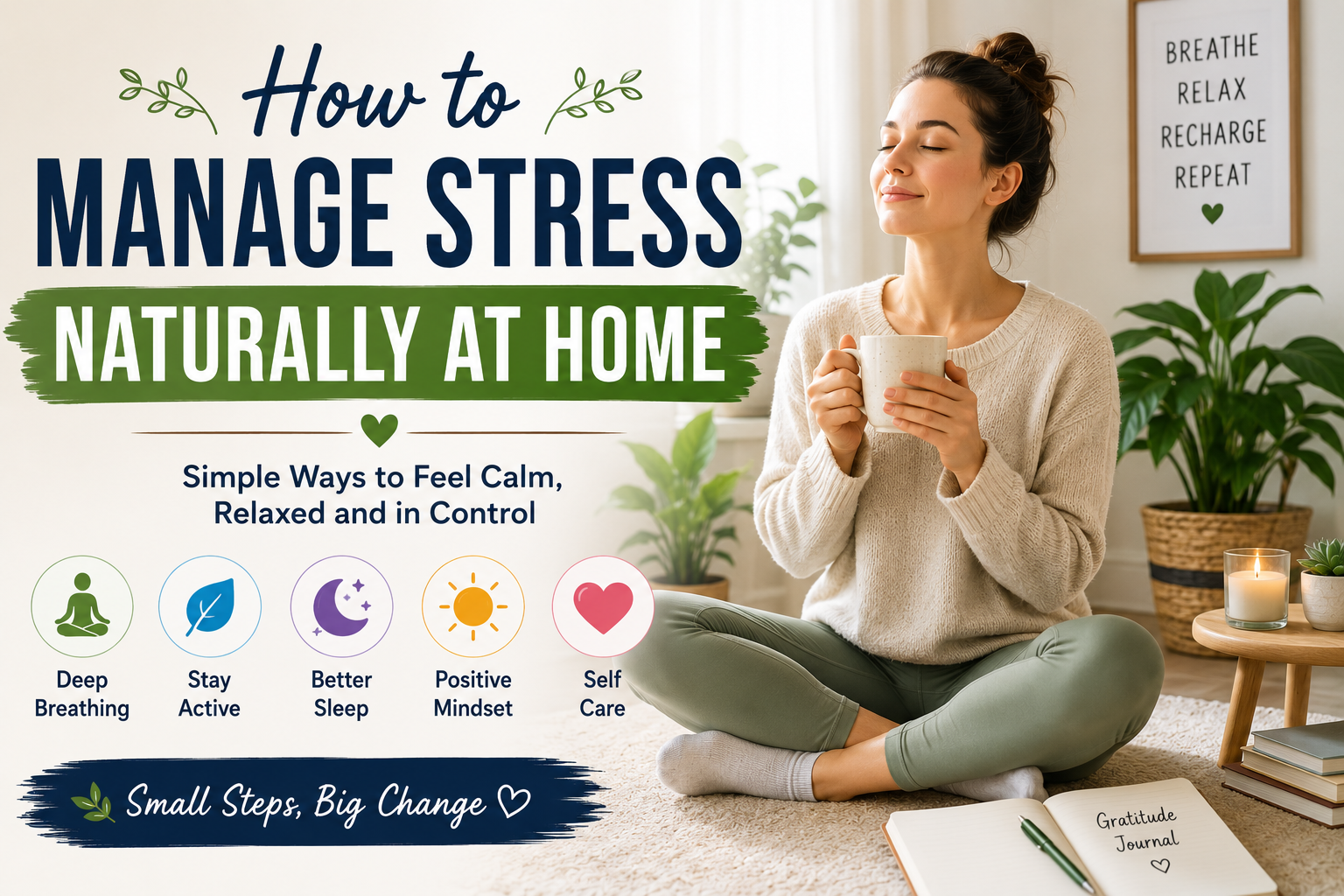
How to manage stress naturally at home: Stress is something almost everyone deals with. Work deadlines, family pressure, money worries, bad sleep — it all piles up. And after a while, your body and mind start to feel it. You feel tired even after sleeping. Small things bother you more than they should. You can’t focus properly.
Here’s the thing nobody tells you — you don’t need an expensive spa, fancy supplements, or a therapist on speed dial to manage stress. Most of the most effective ways to reduce stress are free, simple, and can be done right at home. You just need to know what actually works.
This post covers practical, proven methods. No fluff. No “just think positive” advice. Real things you can start doing today.
What Stress Is Actually Doing to Your Body
Before we get into the fixes, it helps to understand why stress feels so physical. When you’re stressed, your brain sends a signal to release cortisol — that’s the main stress hormone. Cortisol is useful in short bursts. If you need to run from danger, it helps. But when cortisol stays high for days, weeks, or months, it starts causing problems.
Chronic stress can cause:
- Trouble sleeping or waking up tired
- Digestive issues like bloating or an upset stomach
- Headaches that keep coming back
- Weakened immune system — you get sick more often
- Weight gain, especially around the belly
- Anxiety, irritability, or low mood
The good news is that your body also has a built-in “calm down” system — the parasympathetic nervous system. Everything in this post activates that system. Think of it as switching your body from fight mode to rest mode.
1. Use Your Breathing to Reset Your Nervous System
This sounds too simple to work. It’s not. Slow, deep breathing is probably the fastest way to lower your stress response — and the science behind it is solid.
When you breathe slowly and deeply, you activate the vagus nerve, which signals your brain to calm down. Your heart rate slows, your blood pressure drops a little, and your muscles stop being so tense.
Try the 4-7-8 breathing method:
- Breathe in through your nose for 4 seconds
- Hold for 7 seconds
- Breathe out slowly through your mouth for 8 seconds
- Repeat 4 times
Do this when you feel stress coming on, before bed, or any time you feel your chest getting tight. It takes less than 2 minutes and costs nothing.
2. Move Your Body — Even a Little Bit Helps
You don’t need a gym membership or an hour-long workout. A 10-minute walk is genuinely useful. When you move your body, it burns off cortisol and triggers endorphins — the chemicals that make you feel better.
Research from the Harvard Medical School shows that regular exercise is as effective as medication for mild to moderate anxiety and depression. That’s a strong statement — and it’s been replicated in many studies since.
Easy movement options you can do at home:
- A 10-15 minute walk outside (even better if there’s sunlight)
- Yoga or simple stretching — YouTube has hundreds of free videos
- Dancing in your living room (don’t knock it until you’ve tried it)
- Jumping jacks or spot jogging for 5 minutes when you feel overwhelmed
Consistency matters more than intensity here. A little every day beats an intense session once a week.
3. Fix Your Sleep — Stress and Sleep Steal From Each Other
Stress makes sleep harder. Bad sleep makes stress worse. It’s a loop that can feel impossible to break. But there are small things you can change that actually help.
Simple sleep habits that reduce stress:
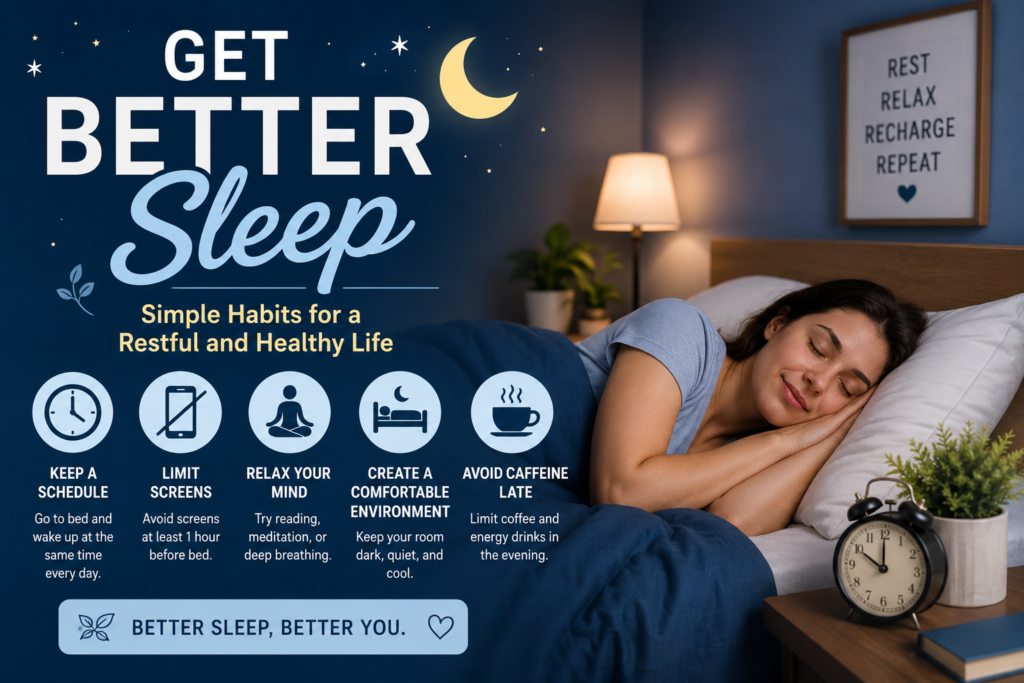
- Go to bed at the same time every night. Your body’s internal clock responds well to routine. Even on weekends, try to keep it consistent.
- Stop screens 30-60 minutes before bed. The blue light from phones and laptops tells your brain it’s still daytime. It delays melatonin and keeps you awake longer than you want.
- Keep your room cool and dark. Your core body temperature drops when you sleep. A cooler room helps that happen faster.
- Write down tomorrow’s tasks before bed. A lot of stress at night is just your brain running through your to-do list. Writing it down gives your brain permission to stop rehearsing it.
4. What You Eat Affects How Stressed You Feel
Most people don’t connect food and stress — but the gut and brain are directly connected through something called the gut-brain axis. An unhappy gut often means an anxious, stressed mind.
Foods that help reduce stress:
- Magnesium-rich foods — dark leafy greens, bananas, pumpkin seeds, and dark chocolate (yes, really). Magnesium helps regulate the stress response and many people are deficient in it.
- Fermented foods — yogurt, buttermilk, and pickled vegetables support gut health, which is tied closely to mood and anxiety.
- Complex carbs — brown rice, oats, whole wheat bread. These stabilize blood sugar, and low blood sugar is a genuine stress trigger.
- Herbal teas — chamomile and ashwagandha tea are both well-researched for their calming effects.
Foods that make stress worse:
- Caffeine in large amounts — a cup of tea or coffee is fine, but too much raises cortisol and makes anxiety worse
- Alcohol — feels relaxing in the moment but disrupts sleep and worsens anxiety the next day
- Ultra-processed snacks — the blood sugar spikes and crashes increase irritability
5. Write It Down — Journaling Actually Works
There’s something about putting your thoughts on paper that reduces their power over you. Stress often feels bigger and more tangled inside your head than it actually is. Writing it out gives you distance from it.
You don’t need to write for an hour. Five minutes is enough. Try one of these approaches:
- Brain dump. Write everything that’s on your mind, no filter. Just get it out of your head and onto paper.
- Gratitude journal. Write 3 things you’re genuinely grateful for each morning. This sounds cheesy, but it shifts your brain toward what’s going right rather than what’s going wrong.
- Stress audit. Write down what’s stressing you and ask: is this something I can control? For things you can’t control, write that down and make a conscious decision to let it go for now.
6. Get Outside — Even 10 Minutes of Sunlight Changes Things
Spending time in nature lowers cortisol. This has been studied quite a lot, especially in Japan where there’s a practice called shinrin-yoku, or forest bathing — just being among trees. But you don’t need a forest. Your backyard, a nearby park, or even sitting by a window that gets good sunlight helps.
Morning sunlight is especially useful. It helps regulate your circadian rhythm, which controls cortisol production throughout the day. People who get morning sunlight tend to sleep better and feel less anxious. Try to get outside within an hour of waking up — even for 10 minutes.
7. Talk to Someone — Connection Is a Stress Reliever
Humans are wired for connection. When you talk to someone you trust, it lowers cortisol and releases oxytocin — a hormone that reduces anxiety and makes you feel safe. This doesn’t have to be a deep conversation about your problems. Just being around people you like helps.
If you live alone or don’t have close people nearby, a phone call works too. Even petting a dog or cat has been shown in multiple studies to lower heart rate and cortisol. Don’t underestimate how much connection matters for your stress levels.
8. Cut Down on News and Social Media
This one is uncomfortable to hear but important. Constant exposure to news — especially bad news, which is most of it — keeps your stress system activated. Your brain can’t always tell the difference between something that’s happening to you directly and something you’re reading about on a screen.
Social media comparison also raises cortisol. Seeing everyone else’s highlight reel when you’re already stressed makes it worse.
You don’t need to quit everything. Just set a limit. Check news once a day, at a fixed time, for 15 minutes. Keep social media off in the morning and the hour before bed. Even this small change makes a noticeable difference for most people.
9. Cold Water on Your Face — Fast and Effective
This is one of the most underrated quick stress fixes. Splashing cold water on your face or the back of your neck activates the dive reflex — a physiological response that slows your heart rate almost immediately.
If you’re brave enough, a cold shower (or ending your regular shower with 30 seconds of cold water) is even more effective. It spikes norepinephrine — a chemical that actually improves mood and reduces anxiety. It’s uncomfortable for a few seconds. But the effect lasts for hours for many people.
10. Do Something You Enjoy — Just for You
Stress accumulates faster when every hour of your day is spent doing things you have to do. Your brain needs time where it’s doing something just because it wants to.
This could be reading, cooking something new, drawing, gardening, listening to music, playing a game — anything that absorbs your attention and doesn’t feel like a task. Psychologists call this a “flow state” — and it’s genuinely restorative. Even 20 minutes of it can shift your entire mood.
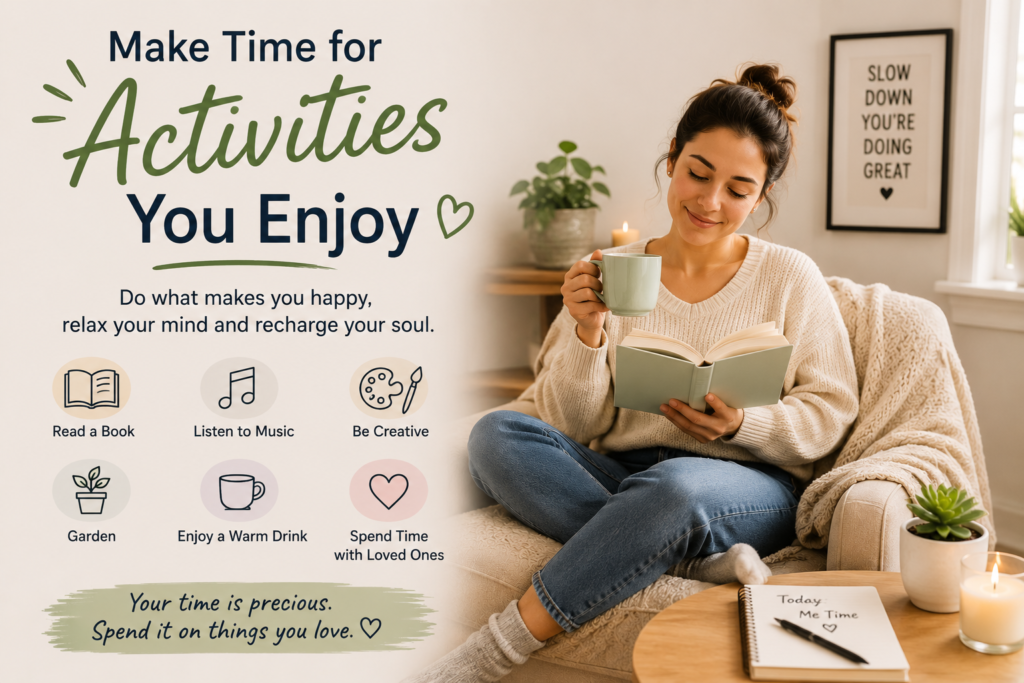
A lot of people feel guilty spending time on hobbies. They feel like they should be doing something useful. But rest is not wasted time — it’s maintenance. A body and mind that get proper rest are more productive, not less.
How to Improve Your Health in One Minute a Day: Simple Habits That Make a Big Difference
Quick Reference: Which Method to Use When
Different stress situations call for different tools. Here’s a simple guide:
| Situation | Best Method | Time Needed |
| Feeling suddenly panicked | 4-7-8 breathing | 2 minutes |
| Stressed before bed | Write tomorrow’s tasks + no screens | 10 minutes |
| General daily stress | Morning walk + sunlight | 15-20 minutes |
| Low mood / anxiety | Exercise or yoga | 20-30 minutes |
| Overwhelmed and scattered | Brain dump journaling | 5-10 minutes |
| Tension in body | Cold water + stretching | 5 minutes |
| Stress eating / gut issues | Adjust diet, add magnesium foods | Ongoing |
How to manage stress naturally at home Final Thoughts
You probably won’t do all ten of these at once. That’s fine. Pick two or three that feel manageable and start there. Breathing and a short walk are the easiest starting points — both work quickly and require nothing special.
Stress doesn’t disappear entirely — life will always throw things at you. But with these habits, your baseline stress level comes down over time. You get better at recovering from stressful moments instead of carrying them around for days.
Small, consistent actions over time matter far more than one big dramatic change. Be patient with yourself. Your nervous system took a while to get wound up — it takes a little time to unwind too.
What is the fastest natural way to reduce stress?
Deep breathing, taking a short walk, and stepping away from screens are some of the quickest ways to reduce stress naturally.
Can exercise help reduce stress?
Yes. Physical activity releases chemicals in the brain that can improve mood and help reduce tension.
How does sleep affect stress?
Poor sleep can increase stress levels, while quality sleep helps your body recover and manage daily challenges more effectively.

Mitul Savaliya is a health and wellness writer based in India and the founder of 1MinuteHealthFix — a platform dedicated to making evidence-based health information quick, practical, and accessible to everyday people.
With a deep personal interest in how small daily habits shape long-term health, Mitul researches topics spanning gut health, sleep quality, metabolism, anti-inflammatory nutrition, and morning routines — drawing from published studies, clinical guidelines, and trusted sources like the NIH, PubMed, and leading health institutions.
Every article on 1MinuteHealthFix is written with a single goal: to give you one clear, actionable takeaway you can apply today. Mitul believes that lasting health is built not through extreme diets or complicated routines, but through simple, consistent actions done daily.
Disclaimer: Content on 1MinuteHealthFix is for informational purposes only and is not a substitute for professional medical advice. Always consult a qualified healthcare provider before making changes to your health routine.