
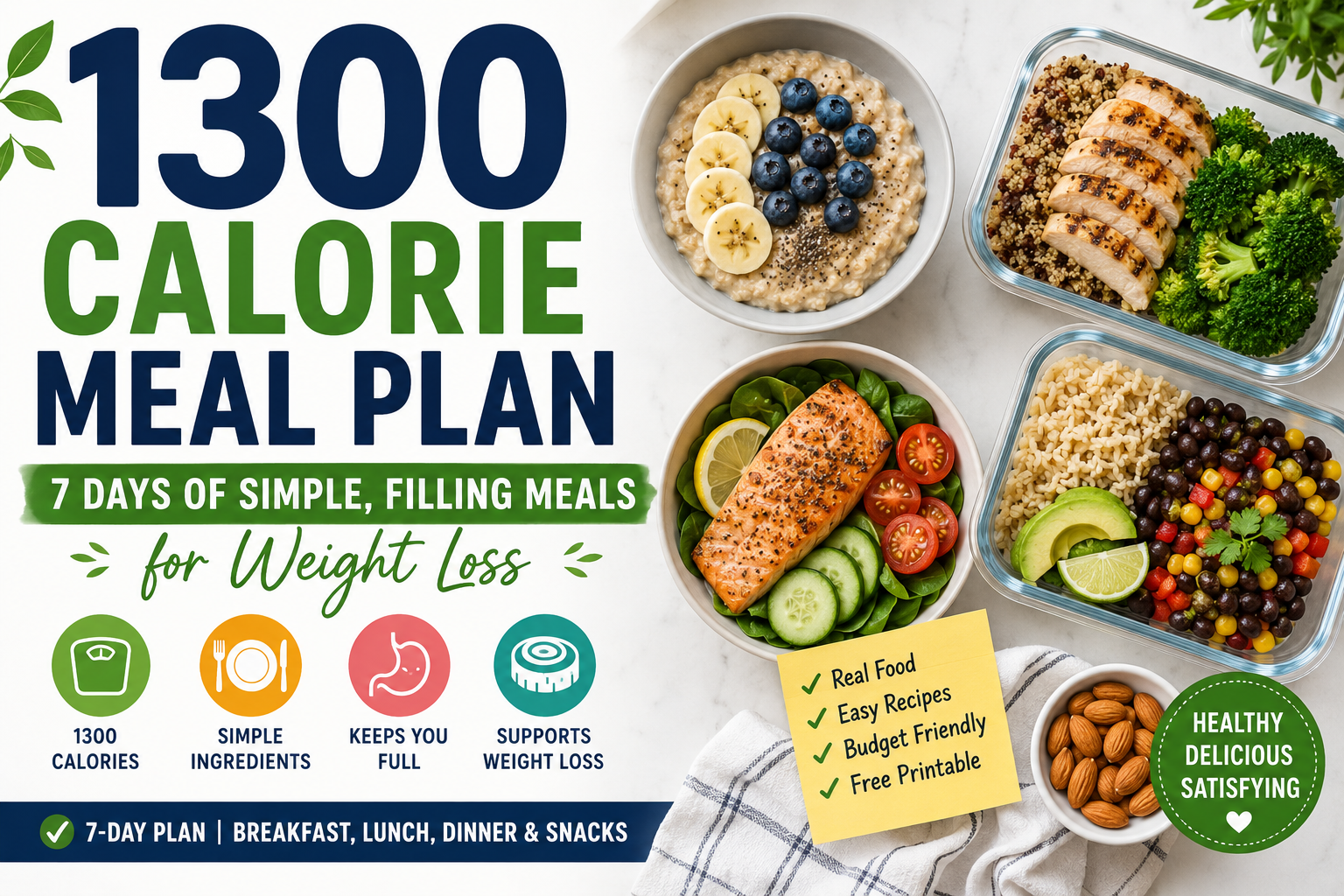
1300 Calorie Meal Plan: Let’s be honest — most diet plans feel like punishment. You’re either eating cardboard-flavored food, spending all Sunday meal prepping like it’s your second job, or feeling hungry by 10 AM even though you just had breakfast.
A 1300 calorie meal plan doesn’t have to be any of that.
When done right, eating 1300 calories a day means real food, normal meals, and not feeling like you’re constantly white-knuckling it through the day. This plan gives you 7 full days of breakfast, lunch, dinner, and snacks — all laid out so you don’t have to think too hard about it.
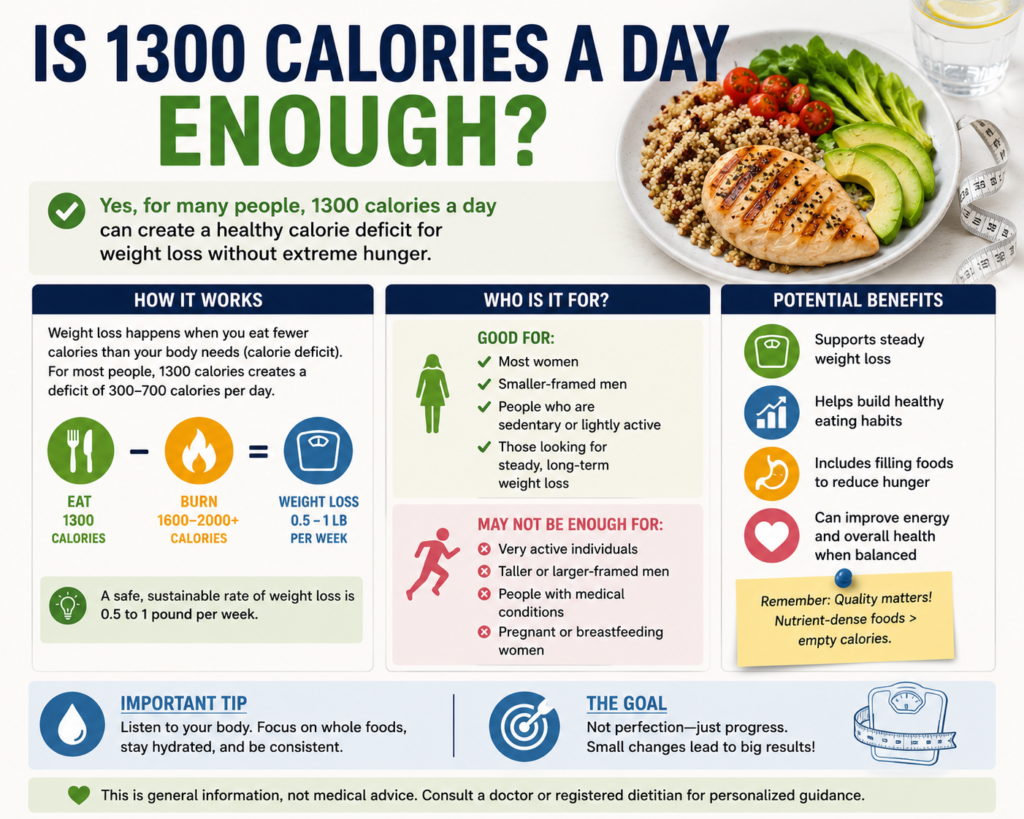
One quick note before we start: 1300 calories works well for many women trying to lose weight at a moderate pace, and for smaller-framed men who are fairly sedentary. If you’re very active, taller, or have specific health conditions, your needs may differ. Always a good idea to check with your doctor or a dietitian before making big changes to how you eat.
Is 1300 Calories a Day Enough?
It depends on the person, but for most people trying to lose weight, yes — 1300 calories creates a calorie deficit without going so low that you feel terrible or lose muscle.
The general rule is that most adults need somewhere between 1,600 and 2,400 calories to maintain their current weight. Eating 1300 calories puts most people in a deficit of 300-700 calories per day, which can lead to losing about half a pound to a pound a week.
That’s not dramatic weight loss, but it’s the kind that tends to stick. Slow and steady genuinely does work better long term.
| Quick math: A 500-calorie daily deficit = roughly 1 pound of weight loss per week. A 300-calorie deficit = about half a pound per week. Both are healthy, sustainable rates. |
What Makes This Plan Actually Work
Before you see the meals, here’s the approach this plan follows. These principles are what make 1300 calories feel doable instead of miserable.
- Protein at every meal — keeps you fuller longer and protects muscle
- Fiber-rich foods — vegetables, legumes, and whole grains slow digestion
- No skipping breakfast — skipping it usually leads to overeating later
- Two small snacks included — so you’re never more than 3-4 hours from food
- Simple ingredients — nothing that requires a specialty store or an hour of prep
- Water — aim for 8 glasses a day, it genuinely helps with hunger
Your 7-Day 1300 Calorie Meal Plan
Each day adds up to approximately 1,250-1,320 calories. Small variations are totally fine — food is not math, and real life means portions aren’t always exact.
| Day 1 – Monday | ||
| Meal | What to Eat | Approx. Calories |
| Breakfast | 2 scrambled eggs + 1 slice whole wheat toast + 1 small orange | ~310 cal |
| Snack | 1 small apple + 1 tbsp almond butter | ~150 cal |
| Lunch | Grilled chicken salad (3 oz chicken, mixed greens, cucumber, tomato, 1 tbsp olive oil + lemon) | ~320 cal |
| Snack | 1/2 cup low-fat Greek yogurt + a few berries | ~100 cal |
| Dinner | Baked salmon (4 oz) + 1/2 cup brown rice + steamed broccoli | ~420 cal |
| Total | ~1,300 cal | |
| Day 2 – Tuesday | ||
| Meal | What to Eat | Approx. Calories |
| Breakfast | Oatmeal (1/2 cup oats cooked) + 1/2 banana + 1 tsp honey | ~280 cal |
| Snack | 10-12 almonds | ~80 cal |
| Lunch | Turkey wrap: 1 whole wheat tortilla + 3 oz turkey breast + lettuce + mustard + tomato | ~340 cal |
| Snack | 1 hard-boiled egg + a few carrot sticks | ~110 cal |
| Dinner | Stir-fried tofu (4 oz) + mixed vegetables + 1/2 cup quinoa, light soy sauce | ~450 cal |
| Total | ~1,260 cal | |
| Day 3 – Wednesday | ||
| Meal | What to Eat | Approx. Calories |
| Breakfast | Greek yogurt parfait: 3/4 cup low-fat Greek yogurt + 1/4 cup granola + handful of blueberries | ~300 cal |
| Snack | 1 medium pear | ~100 cal |
| Lunch | Lentil soup (1.5 cups) + 1 small whole wheat roll | ~360 cal |
| Snack | 1 string cheese + 5 whole grain crackers | ~130 cal |
| Dinner | Chicken breast (4 oz) + roasted sweet potato (1/2 medium) + green beans | ~400 cal |
| Total | ~1,290 cal | |
| Day 4 – Thursday | ||
| Meal | What to Eat | Approx. Calories |
| Breakfast | 2 egg omelette with spinach and mushrooms + 1 slice whole wheat toast | ~290 cal |
| Snack | 1 small banana | ~90 cal |
| Lunch | Tuna salad (3 oz tuna in water + 1 tsp mayo + celery) on lettuce wraps | ~280 cal |
| Snack | 1/2 cup cottage cheese + sliced cucumber | ~120 cal |
| Dinner | Shrimp (4 oz) sauteed with garlic + 1 cup zucchini noodles + marinara sauce (1/2 cup) | ~380 cal |
| Total | ~1,160 cal | |
| Day 4 comes in a little lower. That’s fine — it balances out over the week. If you’re hungry, add a small snack like a handful of mixed nuts or a small piece of fruit. |
| Day 5 – Friday | ||
| Meal | What to Eat | Approx. Calories |
| Breakfast | Smoothie: 1 cup unsweetened almond milk + 1/2 frozen banana + 1 scoop protein powder + handful spinach | ~280 cal |
| Snack | 1 rice cake + 1 tbsp peanut butter | ~130 cal |
| Lunch | Black bean bowl: 1/2 cup black beans + 1/4 cup brown rice + salsa + 1/4 avocado + lettuce | ~380 cal |
| Snack | 1 boiled egg + cherry tomatoes | ~90 cal |
| Dinner | Baked cod (4 oz) + 1/2 cup mashed cauliflower + roasted asparagus | ~380 cal |
| Total | ~1,260 cal | |
| Day 6 – Saturday | ||
| Meal | What to Eat | Approx. Calories |
| Breakfast | 2 whole grain pancakes (small) + 1/2 cup fresh strawberries + no-sugar syrup | ~320 cal |
| Snack | 1/4 cup hummus + sliced bell pepper and cucumber | ~130 cal |
| Lunch | Veggie and egg fried rice: 1/2 cup brown rice + 1 egg + mixed veggies + low-sodium soy sauce | ~320 cal |
| Snack | 1 small orange + 8 walnuts | ~150 cal |
| Dinner | Grilled chicken thigh (3.5 oz, skinless) + roasted Brussels sprouts + small baked potato | ~420 cal |
| Total | ~1,340 cal | |
| Day 7 – Sunday | ||
| Meal | What to Eat | Approx. Calories |
| Breakfast | Avocado toast: 1 slice whole wheat bread + 1/4 avocado + 1 poached egg + pinch of chili flakes | ~310 cal |
| Snack | 1 cup low-fat milk or unsweetened plant milk | ~80 cal |
| Lunch | Chicken and vegetable soup (homemade or low-sodium canned, 1.5 cups) + 5 whole grain crackers | ~320 cal |
| Snack | 1 small handful mixed berries + 1/4 cup Greek yogurt | ~120 cal |
| Dinner | Turkey meatballs (3-4 small) + zucchini noodles or spaghetti squash + tomato sauce | ~430 cal |
| Total | ~1,260 cal | |
Tips to Make This Plan Easier
A meal plan is only useful if you can actually follow it. Here are some things that make a real difference.
Meal Prep on Sunday
You don’t need to cook everything for the week. Just doing a few basics on Sunday saves a lot of time. Cook a batch of brown rice or quinoa, roast a tray of vegetables, and boil a few eggs. Having those ready means lunch and dinner come together in minutes.
Keep Snacks Visible
Put your snacks somewhere you’ll actually see them. If the apples are buried at the back of the fridge and the biscuits are on the counter, you already know what’s going to happen. Make the healthy choice the easy choice.
Drink Water First
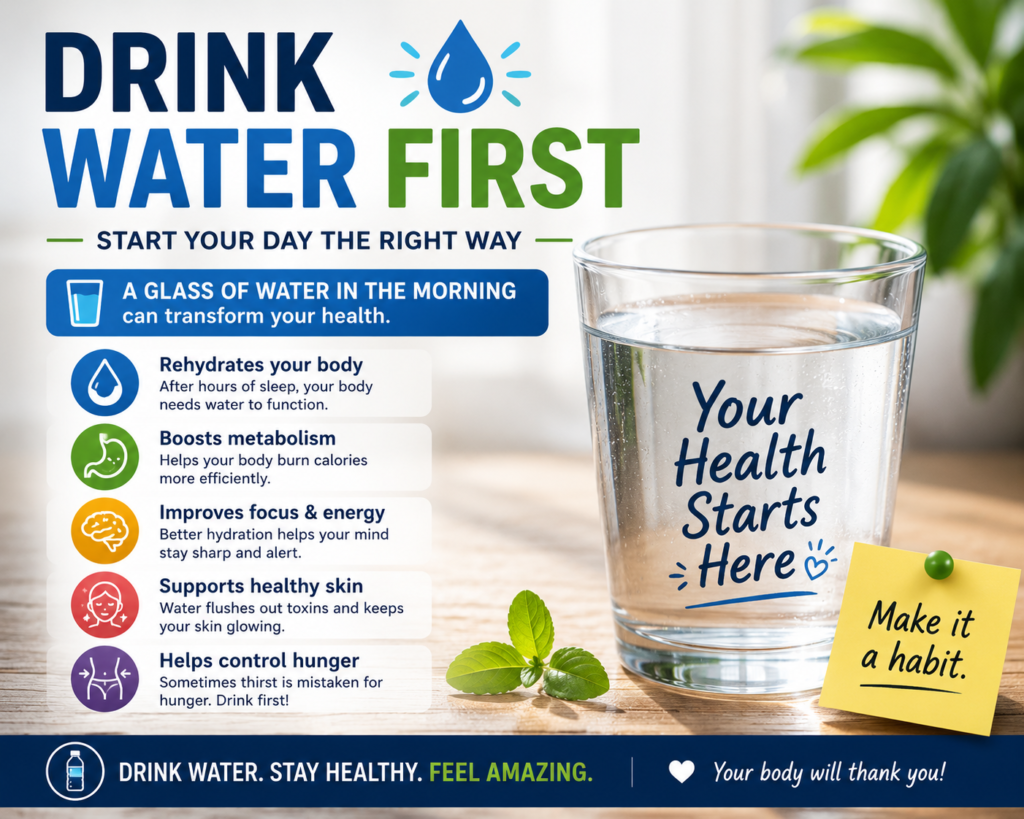
Hunger and thirst feel almost the same to your body. Before you reach for a snack, drink a full glass of water and wait 10 minutes. Sometimes that’s all it takes.
Don’t Skip Meals
Skipping meals to save calories almost always backfires. You end up much hungrier later and it becomes harder to make good choices. Stick to the schedule, especially breakfast.
Swap Freely Within Categories
Don’t like salmon? Use chicken. Not a fan of broccoli? Use any green vegetable. The structure matters more than the specific ingredients. Keep protein, vegetables, and a small amount of complex carbs in each meal and you’re on track.
Foods to Eat More Of on This Plan
- Lean proteins: chicken breast, turkey, eggs, fish, tofu, legumes, Greek yogurt
- Vegetables: all of them, especially leafy greens, broccoli, zucchini, bell peppers, spinach
- Whole grains: oats, brown rice, quinoa, whole wheat bread (in controlled portions)
- Fruits: berries, apples, pears, oranges — stick to 1-2 servings a day
- Healthy fats: small amounts of avocado, nuts, olive oil
- Water, herbal teas, black coffee (no sugar) — as much as you want
Foods to Cut Back On
- Sugary drinks — soda, juice, sweetened coffee. These calories add up fast and don’t keep you full
- White bread, white pasta, refined carbs — swap for whole grain versions
- Processed snack foods — chips, cookies, crackers with long ingredient lists
- Fried foods — occasional is fine, but not a daily thing on 1300 calories
- Alcohol — very calorie-dense and tends to weaken food decision-making
Easy Weight Loss Tips for Beginners: Simple Habits That Actually Work
Low Calorie Meals That Actually Keep You Full: 10 Healthy and Delicious Ideas
Will You Feel Hungry?
In the first few days, maybe a little. Your body is adjusting to a lower calorie intake and that can feel a bit uncomfortable at first. Most people find that after 3-5 days, hunger settles down — especially if you’re eating enough protein and fiber.
If you’re genuinely hungry and not just bored or stressed, add a low-calorie snack like celery sticks with a tablespoon of peanut butter, or a small bowl of vegetable soup. A few extra calories from whole foods isn’t going to derail your progress.
| True hunger vs. habit hunger: true hunger builds gradually and any food sounds good. Habit hunger comes on suddenly, is often tied to time of day or a trigger like stress, and usually points toward specific foods. Knowing the difference helps. |
How Much Weight Can You Lose in 7 Days?
Realistically, in the first week you might see 1-3 pounds drop. Some of that is water weight, which shifts quickly when you change how you eat. Actual fat loss tends to be more like 0.5-1 pound per week at a 1300 calorie intake.
Don’t judge progress by the first week alone. Weight also fluctuates based on water retention, hormones, and sodium intake. Look at the trend over 3-4 weeks for a more accurate picture.
Is 1300 calories too low?
For some people, yes. Very tall people, very active people, or those with higher muscle mass typically need more than 1300 calories. For most moderately active adult women and smaller-framed men trying to lose weight, 1300 calories creates a healthy deficit without being too restrictive. If you feel dizzy, extremely fatigued, or are losing weight too fast, talk to your doctor.
Can I do 1300 calories without feeling hungry all the time?
Yes, if you prioritize protein and fiber. Protein is the most filling macronutrient. Fiber slows digestion. Combining both at every meal is the main reason some people can eat 1300 calories and feel fine while others feel starving — it’s not about willpower, it’s about food choices.
Can I exercise on a 1300 calorie diet?
Light to moderate exercise — walking, yoga, cycling — is completely fine. If you’re doing intense workouts most days of the week, 1300 calories may not be enough to fuel your body well. In that case, consider eating slightly more on workout days, focusing on protein.
What can I drink on a 1300 calorie meal plan?
Water is your best friend. Black coffee and plain tea have essentially zero calories. Avoid sugary drinks, fruit juices, smoothies with lots of fruit, and alcohol unless you account for those calories in your daily total.
Can vegetarians follow this meal plan?
Yes. Swap all meat and fish with plant-based proteins like tofu, tempeh, lentils, chickpeas, black beans, or eggs if you eat them. Greek yogurt and cottage cheese also work well. The structure of the plan stays the same.
Do I need to count calories exactly?
Not to the gram. The calorie numbers in this plan are estimates — different brands, cooking methods, and portion sizes will shift things a little. What matters more is following the structure: lean protein, plenty of vegetables, moderate complex carbs, and healthy fats. Use a free app like MyFitnessPal if you want to track more precisely.

Mitul Savaliya is a health and wellness writer based in India and the founder of 1MinuteHealthFix — a platform dedicated to making evidence-based health information quick, practical, and accessible to everyday people.
With a deep personal interest in how small daily habits shape long-term health, Mitul researches topics spanning gut health, sleep quality, metabolism, anti-inflammatory nutrition, and morning routines — drawing from published studies, clinical guidelines, and trusted sources like the NIH, PubMed, and leading health institutions.
Every article on 1MinuteHealthFix is written with a single goal: to give you one clear, actionable takeaway you can apply today. Mitul believes that lasting health is built not through extreme diets or complicated routines, but through simple, consistent actions done daily.
Disclaimer: Content on 1MinuteHealthFix is for informational purposes only and is not a substitute for professional medical advice. Always consult a qualified healthcare provider before making changes to your health routine.