
Lazy Weight Loss: Let’s be real for a second. Most weight loss advice assumes you have a ton of free time, endless motivation, and an actual desire to meal prep on Sundays and run on a treadmill at 6 AM.
Most people don’t have any of those things.
The good news is that losing weight doesn’t require any of that. There are genuinely lazy ways to create a calorie deficit, move more without exercising, eat less without dieting, and slowly shift your body in the right direction — without turning your life upside down.
These 15 habits are not magic. They won’t get you results overnight. But they’re the kind of small changes that actually stick because they don’t feel like punishment. And that’s what makes them work.
What Makes Lazy Weight Loss Actually Work?
Weight loss comes down to one thing: burning more calories than you eat. That’s it. And while that sounds simple, most weight loss plans fail because they try to create a huge calorie deficit quickly — through strict diets and intense exercise — which is hard to sustain.
Lazy weight loss takes the opposite approach. Instead of making dramatic changes you’ll quit in two weeks, you make small changes that add up quietly over time. A 200-calorie difference here, a few extra steps there. The math still works, it just takes a little longer.
Slower doesn’t mean worse. Weight lost slowly is much more likely to stay off. And habits built gradually become permanent instead of temporary.
| A 200-calorie daily deficit — the size of one small snack — adds up to roughly 20 pounds of weight loss over a year. You don’t have to do anything dramatic. You just have to be consistent with small things. |
15 Lazy Weight Loss Tips That Actually Help
| 1. Drink water before every meal |
| Before you sit down to eat anything — breakfast, lunch, dinner — drink a full glass of water first. That’s it. No counting calories, no changing what you eat. Just water first, every time. Lazy bonus: Studies show people eat significantly fewer calories at meals when they drink water beforehand. Over time, this one swap can shave off hundreds of calories a week without you ever feeling like you’re dieting. |
| 2. Eat from a smaller plate |
| This one sounds too simple to work, but it genuinely does. Your brain judges ‘enough food’ based partly on how full the plate looks. A smaller plate looks full with less food on it. You feel satisfied eating less without noticing the difference. Lazy bonus: Switch from a 12-inch dinner plate to a 9 or 10-inch plate. You don’t need to buy new dishes — a salad plate works fine. No calorie counting required. |
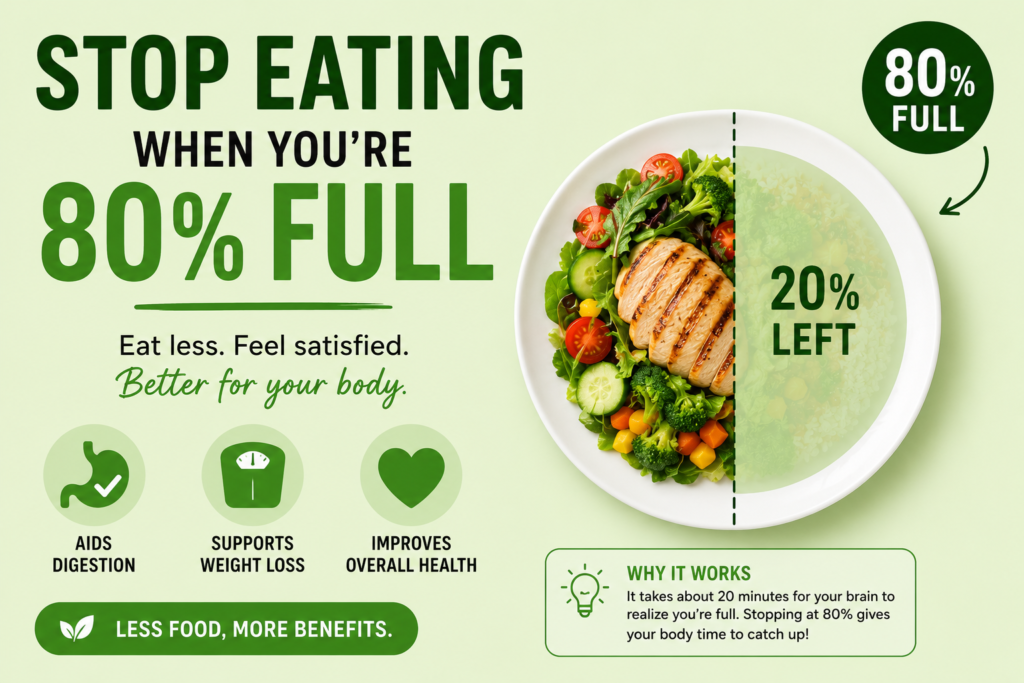
| 3. Stop eating when you’re 80% full |
| This comes from Japanese culture and it’s one of the most effective lazy weight loss habits around. Instead of eating until you’re stuffed, stop a little earlier. Not halfway through — just a few bites before you’d normally stop. Lazy bonus: It takes about 20 minutes for your stomach to signal to your brain that it’s full. Stopping at 80% catches that lag. You end up eating less without feeling hungry because the fullness catches up with you shortly after. |
| 4. Sleep 7 to 8 hours a night |
| If you could take a pill that reduced hunger and made your body burn fat more efficiently, you’d take it. Sleep does both of those things. Poor sleep increases ghrelin — your hunger hormone — and decreases leptin, the hormone that tells you you’re full. You wake up hungrier and less satisfied from food all day. Lazy bonus: You don’t have to work out, eat less, or try hard. Just go to bed earlier. Your body does the work while you’re unconscious. |
| 5. Never drink your calories |
| Sodas, fruit juices, sweet coffees, energy drinks, flavored waters with sugar — these are the sneakiest source of calories in most people’s diets. Liquid calories don’t make you feel full. You drink 250 calories and feel exactly as hungry as before. Lazy bonus: Swap sugary drinks for water, sparkling water, plain coffee, or herbal tea. You don’t have to quit all at once — just replace one drink a day to start. The weekly calorie reduction adds up quickly. |
| 6. Add protein to every meal |
| You don’t need to count grams or use protein powder. Just make sure every meal has something with protein in it — eggs, chicken, fish, Greek yogurt, lentils, cottage cheese, beans. Protein keeps you fuller longer than carbs or fat and costs you more calories to digest. Lazy bonus: Eating more protein at breakfast is especially powerful. Studies show people who eat a high-protein breakfast eat significantly fewer calories later in the day — without trying to eat less. |
| 7. Walk while doing things you already do |
| You don’t need to go for a dedicated walk. Just walk while you’re on the phone. Pace around when you’re watching TV. Walk to a slightly farther bathroom at work. Get off the bus one stop early. These extra steps add up without feeling like exercise. Lazy bonus: An extra 2,000 steps a day — which is very easy to achieve with these kinds of swaps — burns an additional 80-100 calories. That’s 700 calories a week from walking you didn’t even notice. |
| 8. Keep unhealthy food out of sight |
| You don’t need more willpower. You need better placement. When snacks are visible and accessible, you eat them — not because you’re hungry, but because they’re there. Move junk food to a hard-to-reach cupboard. Keep fruit and water on the counter instead. Lazy bonus: Put a bowl of apples, oranges, or bananas on your kitchen counter. Keep a water bottle on your desk. The food you see is the food you eat. Make the healthy choice the lazy choice by making it the visible one. |
| 9. Chew your food more slowly |
| Most people eat way too fast. Your brain doesn’t register fullness during a meal — it takes about 20 minutes to catch up. If you eat quickly, you’ve already overeaten by the time your brain sends the signal to stop. Chewing slower and putting your fork down between bites naturally reduces how much you eat. Lazy bonus: Try putting your fork down after every 2-3 bites. Chew until the food is fully broken down. It feels strange at first. But people who eat slowly consistently eat less and enjoy food more. |

| 10. Use the 10-minute rule when cravings hit |
| When a craving comes — usually for something sweet, salty, or processed — set a 10-minute timer and do anything else. Drink water, walk around, scroll your phone, do anything. Most cravings peak and then pass within 10 minutes if you don’t act on them immediately. Lazy bonus: Cravings are not hunger. They’re usually triggered by boredom, stress, habit, or a visual cue (seeing food on TV, passing a bakery). The urge feels urgent but it’s not. Ten minutes is usually enough to let it fade. |
| 11. Take a short walk after dinner |
| Not a workout — just a 10-minute walk around the block after your evening meal. This is one of the most studied post-meal habits in nutrition research and the results are consistent: even a brief walk after dinner helps your body process the meal better. Lazy bonus: Walking after dinner reduces blood sugar spikes, helps with digestion, and burns a small but real number of extra calories. It also helps break the habit of going straight from dinner to the couch, which is when a lot of mindless snacking happens. |
| 12. Don’t eat in front of a screen |
| When you eat while watching TV or scrolling your phone, you’re distracted. You stop tasting the food and stop paying attention to how full you feel. Studies consistently show that distracted eating leads to eating significantly more — both during the meal and later. Lazy bonus: Eat at a table, without a screen, even if it’s just for 15 minutes. This one change alone helps people eat less without any other effort. It’s called mindful eating and it requires zero extra work — just less multitasking. |
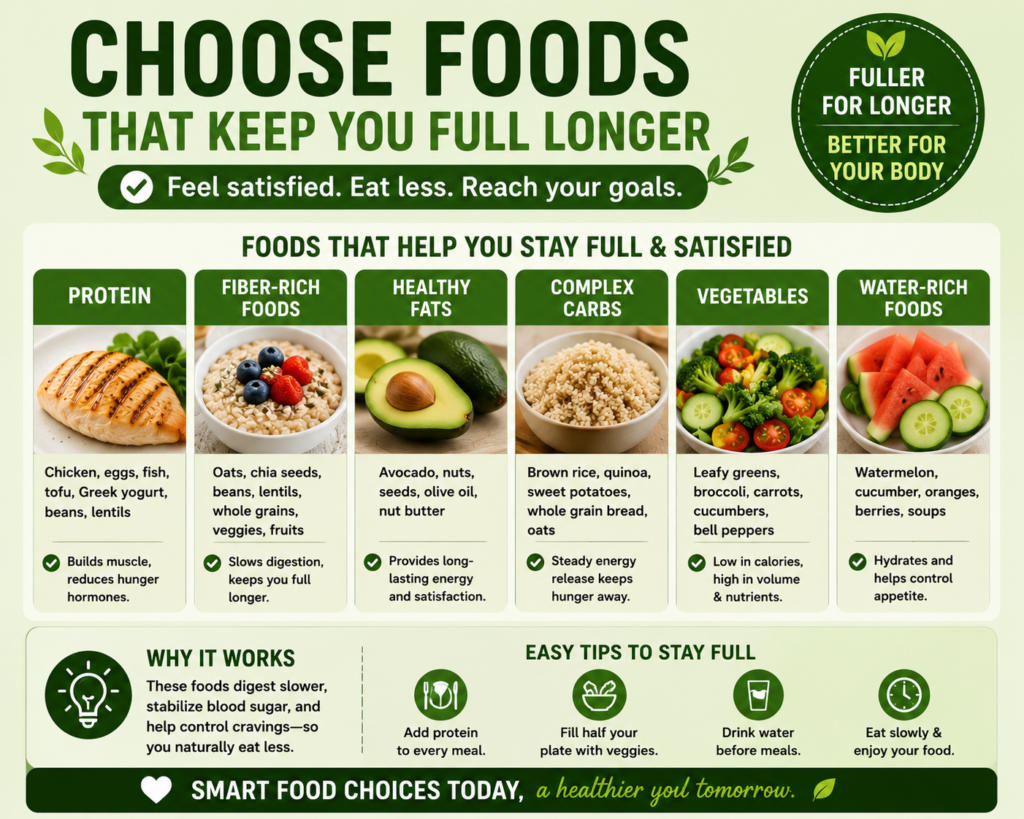
| 13. Choose foods that keep you full longer |
| Some foods fill you up and keep you there. Others leave you hungry an hour later. The filling ones: eggs, oats, Greek yogurt, apples, soup, beans, sweet potatoes. The not-filling ones: white bread, crackers, sugary cereal, chips, juice. Lazy bonus: You don’t have to stop eating the foods you love. But if you start your day or your meals with higher-satiety foods, you’ll naturally eat less of everything else. Same calories-in goal, less hunger. |
| 14. Stand more during the day |
| Sitting all day burns very few calories. Standing burns about 50 more calories per hour than sitting — not a lot, but multiply that by several hours a day and it adds up to several hundred calories a week without any effort. Lazy bonus: You don’t need a standing desk. Just stand while you’re on calls. Stand while you watch something. Stand in the kitchen while dinner cooks instead of sitting at the table. It’s genuinely that low-effort. |
| 15. Meal prep just one thing, not everything |
| Full Sunday meal prep feels overwhelming to most people and doesn’t stick. Instead, just prep one thing. Cook a big batch of rice or quinoa. Boil 6 eggs. Slice some vegetables. Just one thing that makes the week’s eating slightly easier. Lazy bonus: Having one healthy base ingredient ready in the fridge means you’re more likely to eat it when hunger hits instead of ordering food or reaching for something processed. One prepped ingredient beats zero every single time. |
What You Don’t Need to Do
Here’s what you can skip entirely with this approach:
- Counting calories obsessively — these habits create a deficit without tracking
- Going to the gym — extra movement from daily life adds up to real calorie burn
- Cutting out entire food groups — no need to go low-carb, dairy-free, or any other extreme
- Eating food you hate — the goal is less of the same, not different food
- Buying special supplements or products — none of these habits cost anything
The laziest weight loss plan is the one you’ll actually follow. That matters more than the most perfect plan you’ll quit in 10 days.
1300 Calorie Meal Plan: 7 Days of Simple, Filling Meals for Weight Loss
How to Lose Upper Belly Fat: Simple and Effective Ways That Really Work
How Long Will It Take to See Results?
Honest answer: probably 3-4 weeks before you notice anything. Maybe 6-8 weeks before the number on the scale moves in a way that feels meaningful.
That sounds slow, but think about it this way: these habits are easy enough that you can keep doing them indefinitely. The result at 6 months is very different from the result at 6 weeks. And unlike a crash diet, the weight you lose this way tends to stay off because your habits have actually changed.
Weigh yourself once a week at the same time of day if you want to track progress. Daily weigh-ins are misleading because weight fluctuates based on water, sodium, and hormones. The weekly trend is what tells you what’s actually happening.
| Don’t judge your progress in the first two weeks. Water weight shifts a lot when you start eating differently. Look at the trend over 4-6 weeks for an accurate picture of what’s happening. |
Which 3 Tips Should You Start With?
If 15 feels like a lot, start with just these three. They’re the highest impact for the least effort:
- Water before every meal — easiest to implement, consistent research backing it
- Sleep 7-8 hours — you literally do this while asleep
- Stop drinking liquid calories — one swap a day creates a significant weekly deficit
Stick with those three for two weeks. Notice how you feel, whether cravings change, whether your hunger patterns shift. Then add one or two more from the list.
Can you actually lose weight without exercising?
Yes. Exercise helps, but weight loss is primarily about calorie balance — how much you eat versus how much you burn. You can create that deficit through eating habits and low-effort movement without ever going to the gym. It may be slower, but it works. Many people find it more sustainable than gym-heavy approaches they can’t stick to.
How much weight can you lose being lazy?
Realistically, 0.5 to 1 pound per week with consistent lazy habits. That adds up to 25-50 pounds over a year. It won’t happen in a month, but these are permanent habits, not a two-week sprint. The total result over time is significant.
Does sleep really affect weight loss?
Yes, and more than most people realize. Sleep deprivation raises ghrelin (hunger hormone) and lowers leptin (fullness hormone). You wake up hungrier, less satisfied after eating, and more likely to reach for high-calorie foods. Studies consistently show that people who sleep less weigh more, even when eating the same amount.
Do I have to count calories for lazy weight loss?
No. That’s kind of the whole point. The habits in this post are designed to create a calorie deficit automatically through behavior changes, not through tracking numbers. If you enjoy tracking, it can help you be more precise. But it’s not necessary for this approach to work.

Mitul Savaliya is a health and wellness writer based in India and the founder of 1MinuteHealthFix — a platform dedicated to making evidence-based health information quick, practical, and accessible to everyday people.
With a deep personal interest in how small daily habits shape long-term health, Mitul researches topics spanning gut health, sleep quality, metabolism, anti-inflammatory nutrition, and morning routines — drawing from published studies, clinical guidelines, and trusted sources like the NIH, PubMed, and leading health institutions.
Every article on 1MinuteHealthFix is written with a single goal: to give you one clear, actionable takeaway you can apply today. Mitul believes that lasting health is built not through extreme diets or complicated routines, but through simple, consistent actions done daily.
Disclaimer: Content on 1MinuteHealthFix is for informational purposes only and is not a substitute for professional medical advice. Always consult a qualified healthcare provider before making changes to your health routine.