
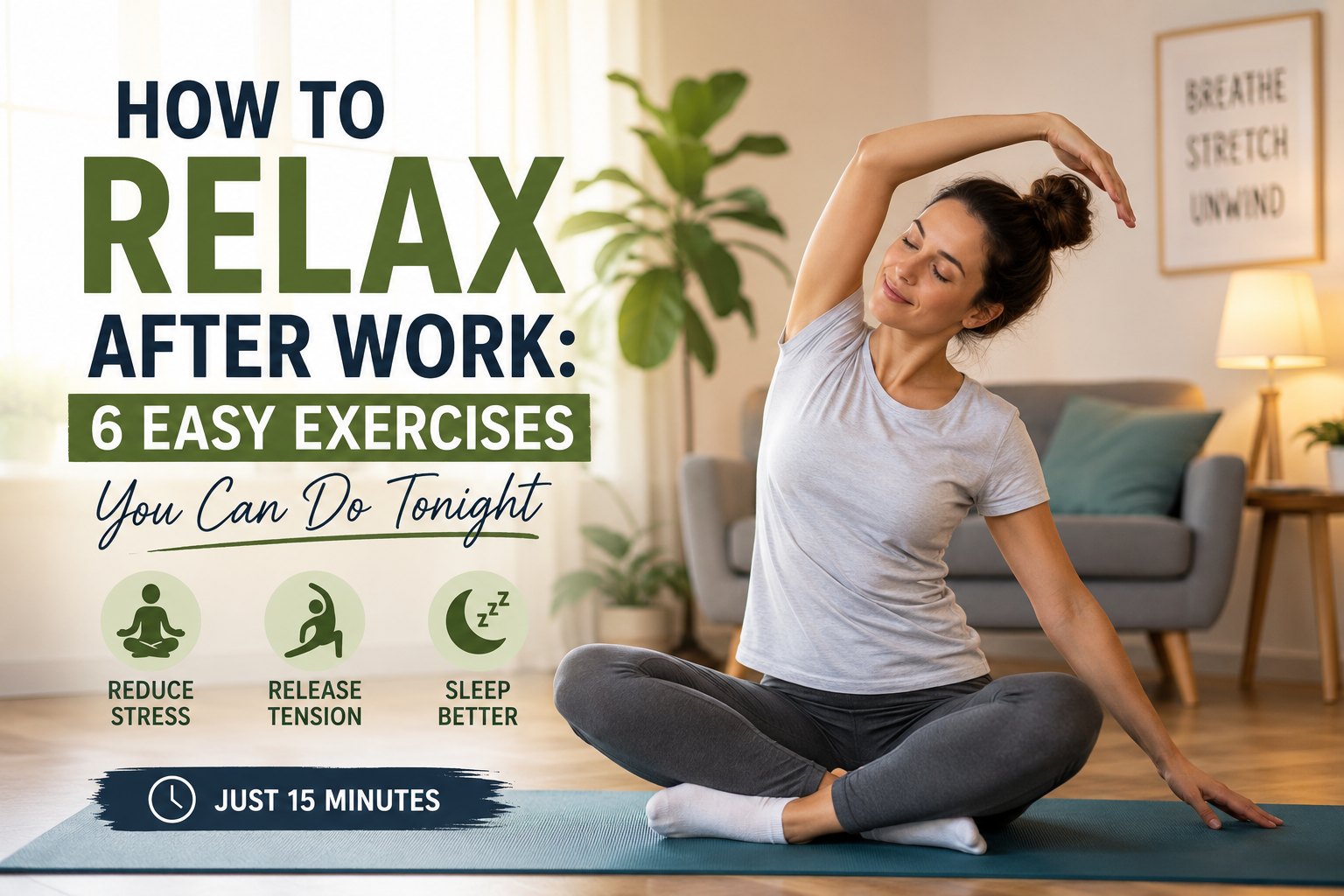
How to Relax After Work: You know the feeling. You clock out, drive home, and your shoulders are somewhere up near your ears. Your brain is still replaying that one email. You sit down on the couch, and somehow you feel more tired than when you were actually working.
That’s not just “being tired.” It’s your body still holding on to the day. And the good news is, you don’t need a gym membership or an hour you don’t have to fix it. A few simple moves, done right when you get home, can shake that tension loose in about 15 minutes.
Here are six easy exercises that actually help you relax after work, plus a couple of tips to turn this into a habit instead of a one-time thing.
Why Your Body Holds On to Work Stress
If you sit at a desk all day, your hip flexors tighten up and your upper back rounds forward. If you’re on your feet all day, it’s usually your lower back and calves that take the hit. Either way, your nervous system stays a little bit “on” long after you’ve left the building.
Movement is what tells your body the workday is actually over. It’s a signal, almost like closing a door behind you. That’s why a short walk or a few stretches can do more for your mood than scrolling your phone on the couch, even though the couch feels easier in the moment.
1. Neck and Shoulder Rolls (2 Minutes)
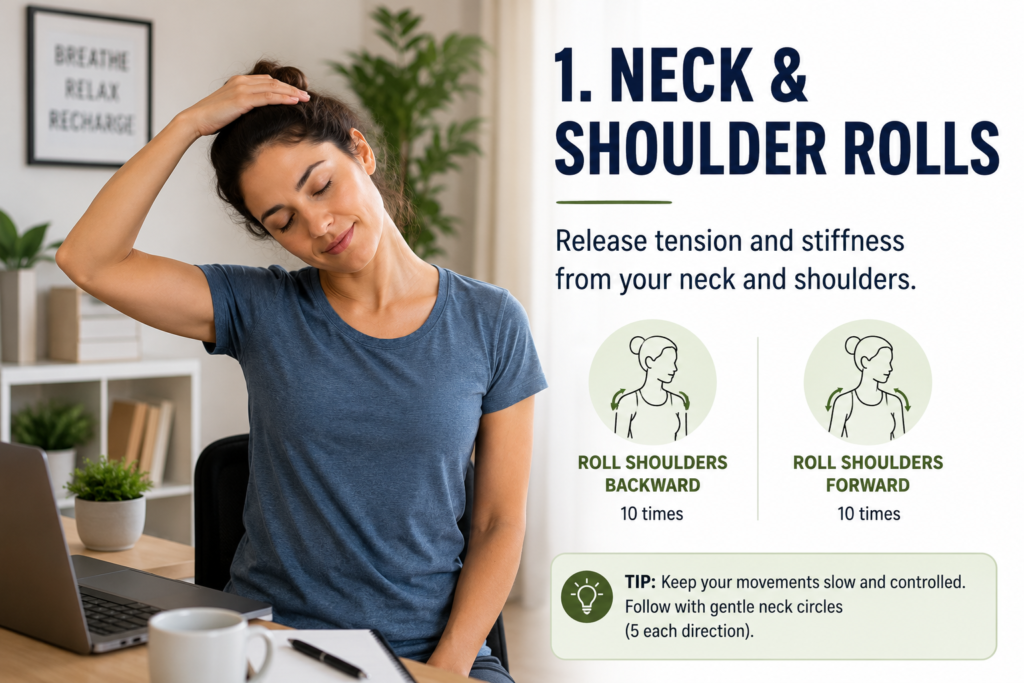
Start here if you sit at a computer all day. Stand or sit up tall, drop your shoulders away from your ears, and slowly roll them backward in big circles, ten times. Then roll them forward ten times. Follow that with gentle neck circles, five each direction, going slow and never forcing it.
This one sounds too simple to matter, but it’s often the fastest way to feel a difference. Most people carry their stress right in the neck and shoulders without even noticing.
2. Standing Forward Fold
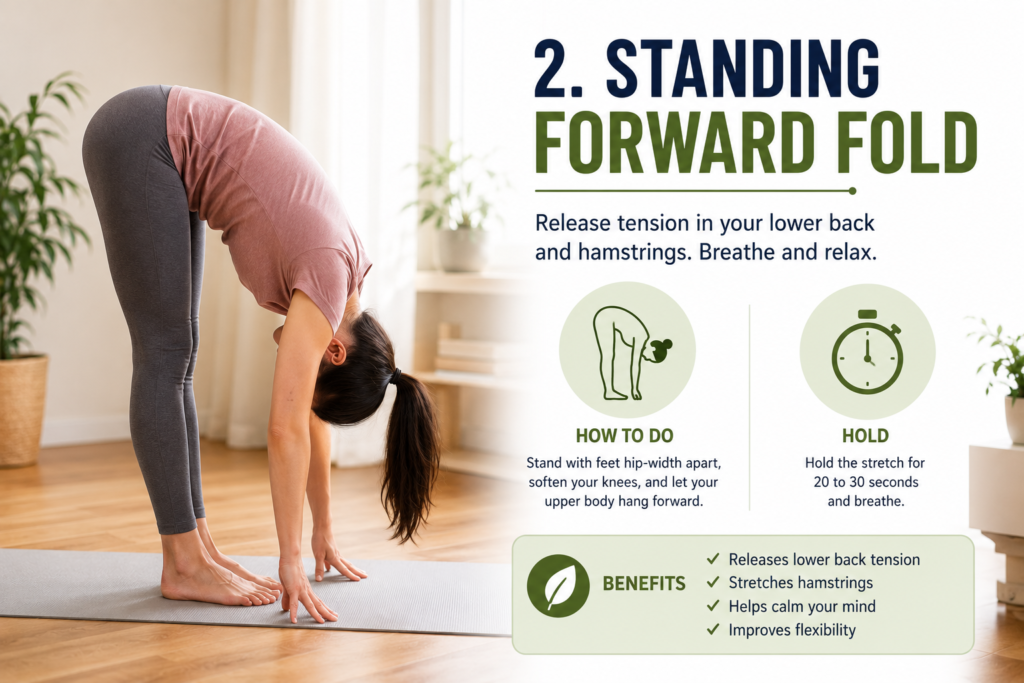
Stand with your feet hip-width apart, soften your knees, and let your upper body hang forward toward the floor. Let your head and arms just dangle. Hold for 20 to 30 seconds and breathe.
This stretch releases your lower back and hamstrings, and there’s something about hanging upside down, even a little, that seems to reset your mood. It’s a small move that carries a surprising amount of relief.
3. Doorway Chest Stretch
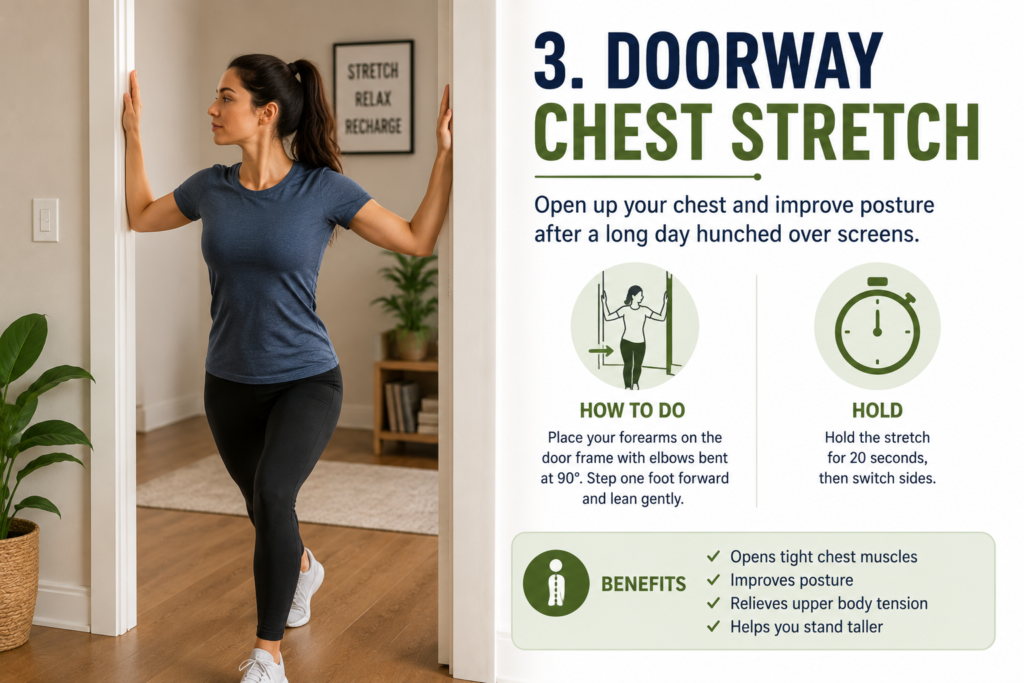
Stand in a doorway, place your forearms on the frame with your elbows bent at 90 degrees, and gently step one foot forward until you feel a stretch across your chest. Hold for 20 seconds, then switch your foot.
If you spend the day hunched over a keyboard or a phone, your chest muscles get tight and pull your shoulders forward with them. This stretch pulls things back into place and makes you stand a little taller almost instantly.
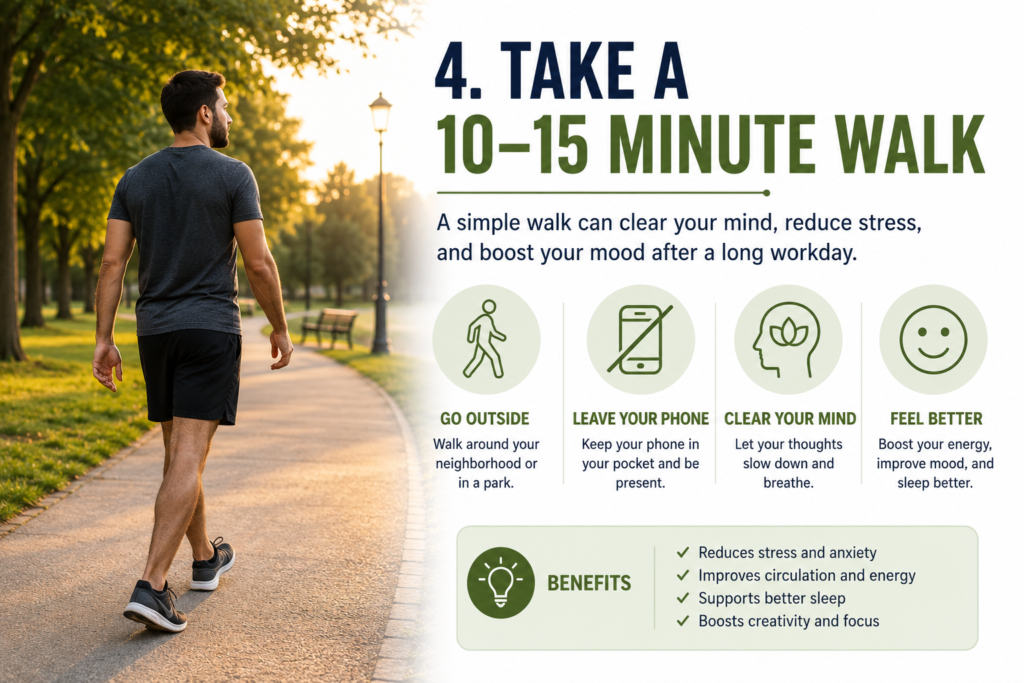
4. A 10 to 15 Minute Walk
Nothing fancy here, just walk. Around the block, around your yard, even laps inside your apartment if the weather’s bad. Leave your phone in your pocket if you can and just let your mind wander.
Walking is one of the most underrated ways to unwind. It burns off leftover adrenaline from the day, gets fresh blood moving to muscles that have been sitting still, and gives your brain a break from staring at screens. Ten minutes is enough to notice a change.
5. Legs Up the Wall
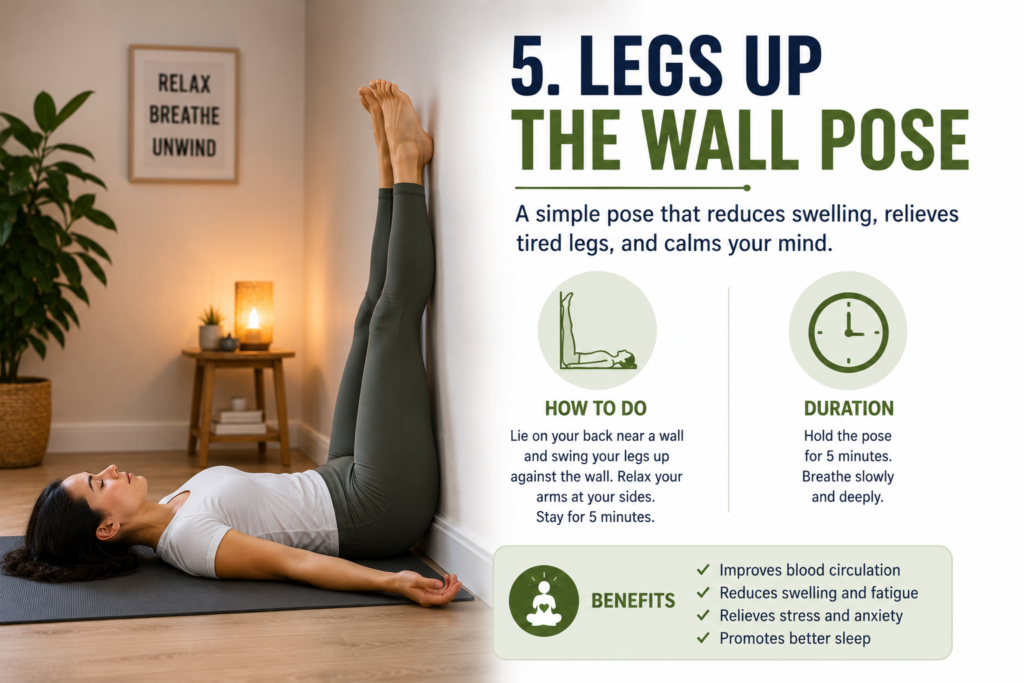
Lie on your back near a wall and swing your legs up so they rest against it, forming an L shape with your body. Stay here for five minutes, arms relaxed at your sides, eyes closed if you want.
This one is a favorite for a reason. It takes pressure off tired feet and legs, and it naturally slows your breathing down without you having to think about it. A lot of people use this move right before falling asleep.
6. Box Breathing
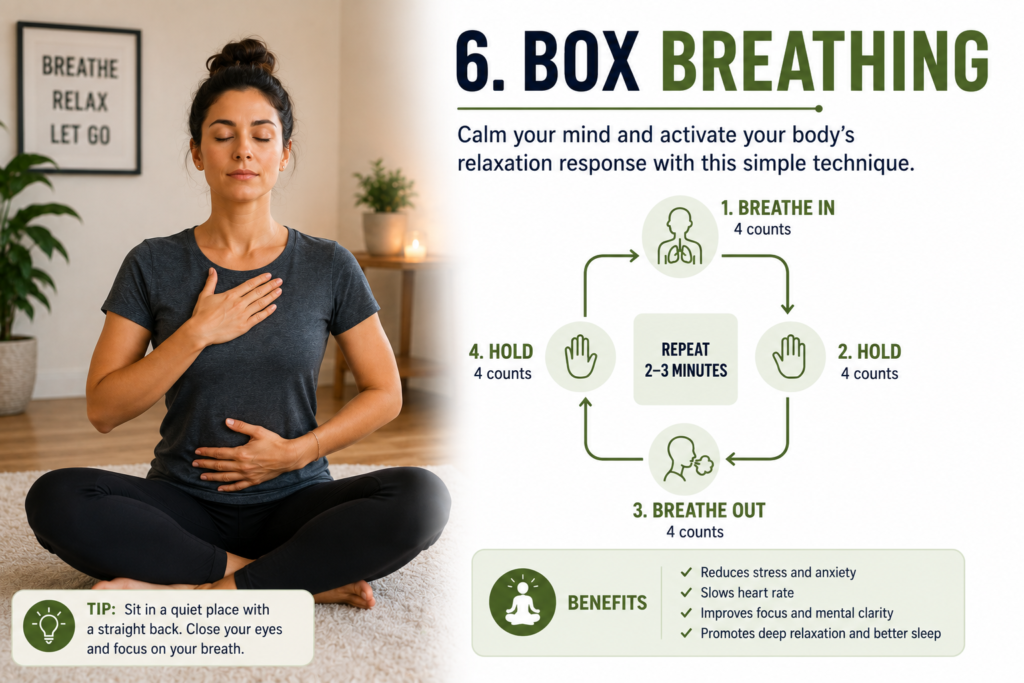
Sit somewhere quiet. Breathe in for 4 counts, hold for 4 counts, breathe out for 4 counts, hold for 4 counts. Repeat that pattern for two or three minutes.
This isn’t really an exercise for your muscles, it’s an exercise for your nervous system. Slow, controlled breathing tells your body it’s safe to calm down. Pair it with any of the stretches above and the effect is even stronger.
Easy Weight Loss Tips for Beginners: Simple Habits That Actually Work
How to Deal with Anxiety When Alone: 10 Simple Ways to Calm Your Mind
How to Relax After Work: How to Actually Stick With This
Knowing these moves is one thing. Doing them after a long day when all you want is your couch is another. A few things that make it easier:
- Change clothes first. Swapping work clothes for something comfortable signals to your brain that the workday is done.
- Do it before you sit down, not after. Once you’re on the couch, it’s hard to get back up.
- Keep it short on purpose. Fifteen minutes feels doable. An hour feels like a chore, so you’ll skip it.
- Same time, same spot. Doing this right when you walk in the door, in the same corner of the living room, turns it into a habit faster than you’d expect.
How long should I stretch after work?
Ten to fifteen minutes is plenty for most people. You’re not training for anything, you’re just undoing the day.
Can I do this if I already work out separately?
Yes. This isn’t a workout, it’s a wind-down. Even people who exercise in the morning still carry tension from sitting or standing all day at work.
What if I only have five minutes?
Do the neck and shoulder rolls plus box breathing. Those two together take under five minutes and still make a real difference.

Mitul Savaliya is a health and wellness writer based in India and the founder of 1MinuteHealthFix — a platform dedicated to making evidence-based health information quick, practical, and accessible to everyday people.
With a deep personal interest in how small daily habits shape long-term health, Mitul researches topics spanning gut health, sleep quality, metabolism, anti-inflammatory nutrition, and morning routines — drawing from published studies, clinical guidelines, and trusted sources like the NIH, PubMed, and leading health institutions.
Every article on 1MinuteHealthFix is written with a single goal: to give you one clear, actionable takeaway you can apply today. Mitul believes that lasting health is built not through extreme diets or complicated routines, but through simple, consistent actions done daily.
Disclaimer: Content on 1MinuteHealthFix is for informational purposes only and is not a substitute for professional medical advice. Always consult a qualified healthcare provider before making changes to your health routine.